
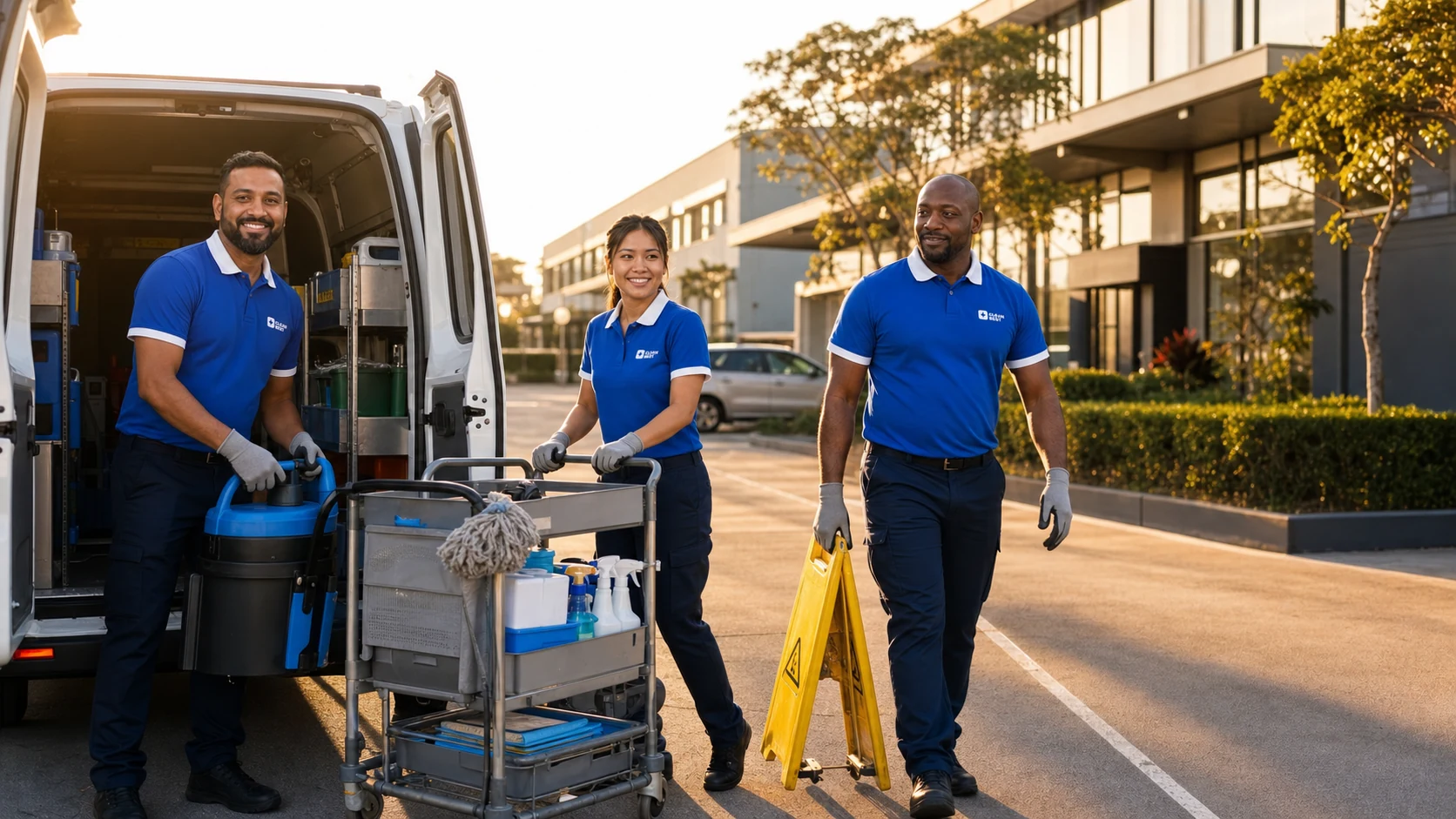
Due diligence
What to Ask a Commercial Cleaning Contractor
Every commercial cleaning proposal reads well. The difference between the ones that hold and the ones that quietly rot shows up in what the contractor can evidence — and in who checks the site once the novelty has worn off. Here is what to ask, and what to ask for.
- The documents to demand before you commit
- How to tell a real specification from a template
- The question about auditing that nobody asks
- What should happen when a site fails
Operating since 2015
One documented cleaning standard, applied site by site across Sydney and regional NSW
- Police-checked cleanersVetted and inducted before they set foot on your site
- $20m public liabilityCertificates of currency issued before the first shift
- Rolling agreement, no lock-in termScope and price in writing within 24 hours
What should you ask a commercial cleaning contractor?
Before appointing a commercial cleaning contractor, ask for four things in writing: certificates of currency for public liability insurance and workers compensation, the police check register for the crew who will attend the site, a Safe Work Method Statement written for that specific premises where the environment warrants one, and the cleaning specification for the address.
Then interrogate the specification. It should list tasks against a frequency — per visit, weekly, periodic — rather than describe an outcome such as “kept clean and presentable”, which is unenforceable. It should describe your building: your loading dock, your after-hours lift rule, your kitchen. A specification that could belong to any premises in Sydney belongs to none of them.
Finally, ask who audits the site after the first month, how often, and whether findings are sent when nothing is wrong. Clean Best Australia issues an eight-document compliance pack at mobilisation, writes a specification per address from an on-site inspection, and audits every site monthly against it.
- Operating since 2015Trading continuously since 2015
- Police-checked cleanersWorkplaces, clinics, campuses, buildings and homes
- $20m public liabilityPlus workers compensation for every person on the roster
- Every site audited monthlyFindings and corrective actions issued in writing
How to run the assessment
The questions that separate a real commercial cleaner from a good proposal
Buyers who know what to ask a commercial cleaning contractor get burnt far less often, because the failure is always the same and it is visible in advance. The pitch is excellent. The first month is excellent. Then the cleaner assigned to the site leaves, a replacement is sent who was never told what the job actually involves, and standards decay so gradually that nobody can name the week it happened. By the time it is escalated the relationship is already finished — the escalation is just the paperwork.
The failure is not laziness. It is that the specification only ever existed in one person’s head, and that person is no longer on the site. Everything Clean Best Australia does is built around removing that single point of failure.
Every address gets its own written specification
Not a contract clause. A document, per premises, listing what is done at every visit, what is done weekly, and what is done on a periodic cycle — carpet extraction, high dusting, vent cleaning, hard-floor treatment. A Silverwater warehouse and a Barangaroo tenancy sit under the same agreement, the same insurance and the same account manager, but their specifications look nothing alike, because the buildings are nothing alike. That document is what our supervisor audits against and what you hold us to when something is missed.
Vetting that can be evidenced, not asserted
Every cleaner is police-checked before their first shift and the check is recorded on a register we can produce, not reconstruct. Anyone rostered to a school, an early learning centre or a paediatric practice also holds a current Working with Children Check. Cleaners are inducted on the specific building — how they get in, which lifts work after hours, where the bin room is, who to call at 10pm — and the induction is recorded against the site rather than assumed.
The compliance pack is prepared, not promised
Certificates of currency for public liability and workers compensation. The police check register for the crew on your building. WWCC numbers where they apply. A Safe Work Method Statement written for that specific premises where the environment warrants one. The chemical register with safety data sheets attached. The signed specification. Your compliance team gets that pack at mobilisation. The reason is not diligence for its own sake — it is that the week your organisation is audited is a bad week to discover your cleaning contractor cannot find its own paperwork.
Audits happen when nothing is wrong
A supervisor walks each commercial site every month against its written specification and sends the findings. This includes the sites that passed, because a report that lists only failures tells you nothing about whether anyone actually looked. Where something is below standard it is rectified before the next scheduled visit and at our cost. Where a site keeps failing, we change the cleaner. That is a staffing decision, and treating it as a customer service exercise is how providers end up writing eloquent letters instead of cleaning the building.
One organisation, one register, one invoice
If you hold multiple premises, the single most valuable thing we do has nothing to do with cleaning. It is that you deal with one account manager — the person who inspected your sites and wrote the specifications — one site register and one consolidated invoice. Sites can be added when you take a lease and removed when you exit one, without renegotiating the agreement. The alternative, which most organisations arrive here from, is a different provider per building, each blaming the others, and a month-end reconciliation nobody enjoys.
What it costs to find out
A supervisor inspects every site at no charge, in the state the site is actually in — after hours, bins full, kitchen used. Within 24 hours you receive the specification and a fixed price. There is no published rate card, because a rate card cannot see your loading dock. And there is no lock-in term: the agreement is rolling, thirty days notice either way, whether it covers one shopfront or fifteen buildings.
Call 02 5839 3012 and read us the address list. If your current provider is doing well at a site, we will tell you that too — it is far cheaper than winning work we cannot improve.
Access and security
After-hours access, recorded rather than remembered
Before the first shift, the way into each building is documented: swipe card, key safe, alarm code, concierge sign-in, the lift that stops working after 7pm, the dock roller door that only opens from inside. Every cleaner assigned to that site is inducted on that specific procedure, and every entry and exit is logged.
That log is usually the moment building management stops asking who was on level four at 9pm, and it is what lets us hand a site to a relief cleaner without the standard collapsing. The knowledge is in the register, not in one person's memory.
- Access procedure documented per building, not per client
- Cleaners inducted individually on that procedure
- Every entry and exit logged; premises locked and alarmed on exit
- Relief cleaners briefed from the register, not from memory
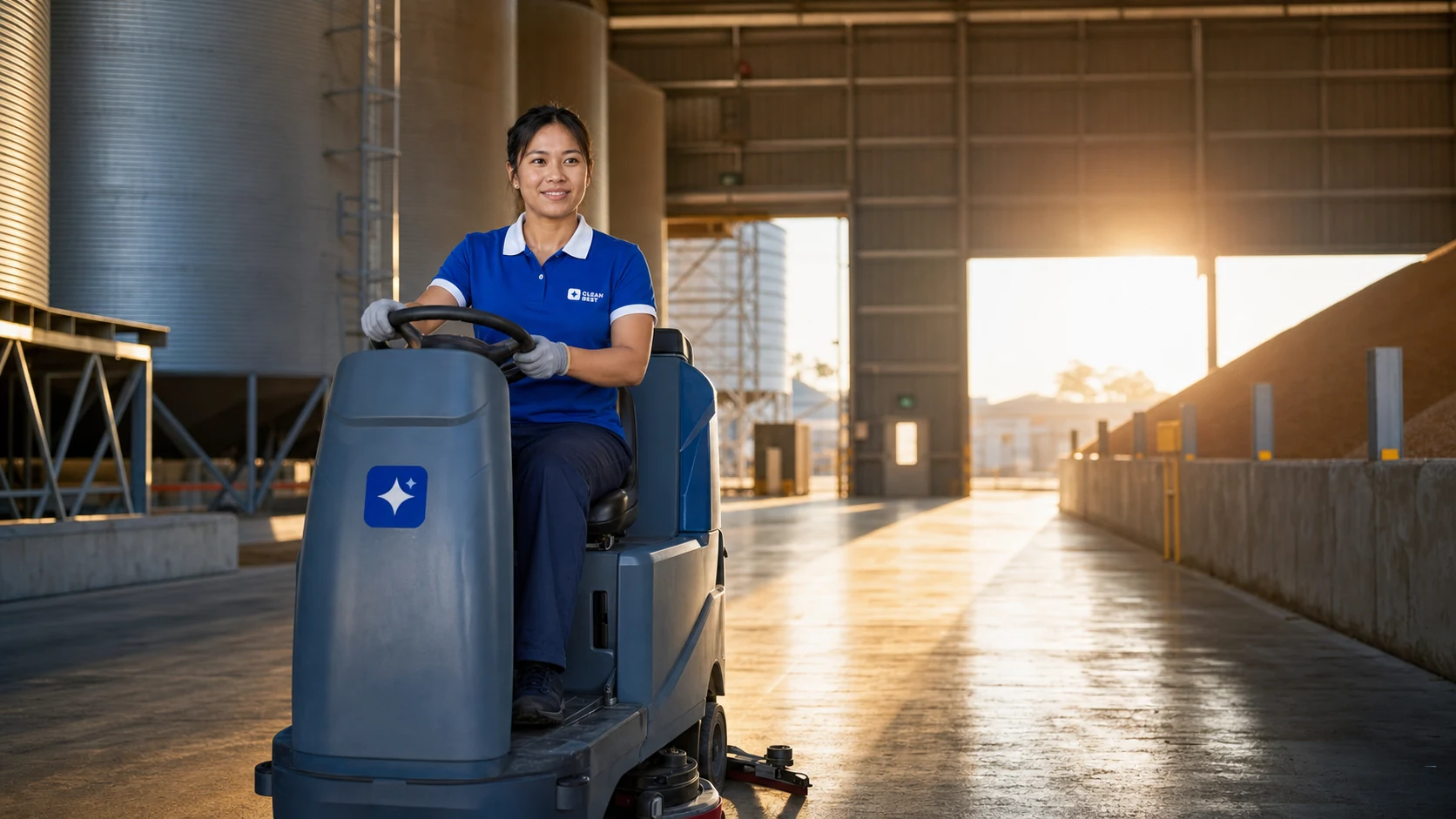
The written specification
What a commercial specification usually covers
The shape of a typical scope for a Sydney commercial premises. Yours is written from the inspection — this is the pattern it tends to follow.
- Empty all waste and recycling, replace liners and remove to the building bin room
- Sanitise washrooms: pans, urinals, basins, mirrors, partitions and floors
- Restock washroom consumables before they run out, not after somebody reports it
- Clean and disinfect kitchens and breakout areas including benches, sinks and appliance exteriors
- Vacuum all carpet, including under desks, along skirtings and in low-traffic corners
- Mop and spot-clean hard floors in entries, amenities and circulation areas
- Disinfect touchpoints: door handles, switches, lift buttons, printer panels, taps and rails
- Clean internal glass, partition panels, entry doors and reception glazing
- Present reception and entry: counter, mats, visitor seating and signage
- Wipe and reset meeting rooms including tables, chair bases, whiteboards and AV touchpoints
- Rotate detail work: high dusting, air vents, light diffusers and skirting detail
- Secure the premises on exit: lights off, doors locked, alarm set, entry and exit logged
Carpet extraction, hard-floor stripping and sealing, external glass and pressure washing run as scheduled periodic programmes and are priced separately from the recurring scope.
Commercials
How a Clean Best Australia price is built
We price what we can see: measured areas, surface types, traffic, access windows and the frequency the site genuinely needs. The figure is fixed, issued in writing before the first shift, and it does not move unless the scope does.
Single site
One premises, one access window, one point of contact. Most clinics, suites, studios and shopfronts start here.
- Scope measured and written on the day we inspect
- One named cleaner, inducted on your access procedure
- Monthly supervisor audit against that written scope
- Rolling agreement, thirty days notice either way
Fixed figure, issued in writing before anyone starts.
Multi-site portfolio
Between two and roughly fifteen premises under one organisation — franchise groups, clinic networks, agency-managed buildings.
- One specification applied identically at every address
- One account manager and one consolidated monthly invoice
- Per-site register: inductions, chemicals, keys, alarm codes
- Sites added or removed without renegotiating the agreement
Fixed figure, issued in writing before anyone starts.
Managed programme
Large portfolios and organisations with a procurement process, a tender, or a compliance team who will ask for evidence.
- Documented WHS method, SWMS and chemical registers per site
- Insurance certificates supplied direct to your compliance team
- Quarterly performance review against agreed measures
- Periodic programmes — carpet, hard floors, glass — planned annually
Fixed figure, issued in writing before anyone starts.
Site inspection at no charge, then a written scope and price inside 24 hours.
The process
How a commercial cleaning changeover runs
Four steps. A single premises is usually inspected within 48 hours; a portfolio takes about a fortnight to mobilise properly.
- 01
Send the address list
Call 02 5839 3012 with the premises, what each one is, the access constraints, and the nights the building actually allows a cleaner in.
- 02
Supervisor inspection
We walk every site in person, measure the areas, identify the surfaces and photograph the problems. No commercial premises is ever quoted from a floor plan.
- 03
Specification and fixed price
Inside 24 hours you receive a written specification per site — per-visit, weekly and periodic tasks — with the price attached and nothing hidden in an hourly rate.
- 04
Mobilise and audit
Cleaners are inducted per building, the compliance pack goes to your contact, and the first monthly audit lands four weeks after the roster starts.
FAQ
What to ask a commercial cleaning contractor, before you sign
What operations managers, property managers and procurement leads want settled on the first call.
What should a commercial cleaning specification actually contain?
It should list tasks against a frequency, not describe an outcome. A specification that says the premises will be kept clean and presentable is unenforceable and both sides know it. A real one names the per-visit tasks — waste, washrooms, kitchens, floors, touchpoints, glass, lock-up — and separates them from the weekly and periodic work such as high dusting, vents, carpet extraction and hard-floor treatment, each with the cycle it runs on. Ask to see one written for your building, not a sample.
Should a commercial cleaner work outside business hours?
Almost always, and a contractor who has not asked about your building's after-hours access has not thought about the job. Most commercial sites are cleaned between 6pm and midnight, or pre-dawn where the building restricts evening lift access. Agree a window rather than a start time, because Sydney traffic makes a precise minute a promise nobody keeps. Ask what happens at lock-up, and whether entries and exits are logged — that is the answer building management will eventually want.
Can one agreement cover premises in different suburbs?
Yes, and it should. Splitting a portfolio between local providers is how organisations end up with four standards and four invoices. One agreement with Clean Best Australia covers every address, with a specification written per site because a Silverwater warehouse and a Barangaroo tenancy are not the same job. What is shared is the vetting, the insurance, the audit cycle, the account manager and the invoice.
What insurance and compliance documents do you supply?
Certificates of currency for twenty million dollars of public liability and for workers compensation, the police check register for the crew assigned to your building, WWCC numbers where the site needs them, a Safe Work Method Statement written for the specific premises, the chemical register with safety data sheets, and the site induction record. They are issued at mobilisation. If your building manager asks for them at 9am, they are not something we have to go and create.
How do you keep standards from slipping after the first month?
Two mechanisms, and neither is a promise. The first is the written specification, which means nobody is guessing what the job is. The second is the monthly audit: a supervisor walks the site against that document and sends you the findings, including the sites that passed. Anything below standard is rectified before the next visit at our cost. Where a site keeps failing, we change the cleaner rather than write you an explanation.
Do you use subcontractors for commercial work?
The people in your building are on our roster, police-checked, inducted on your specific premises and covered by our workers compensation policy. It matters more than it sounds. It is why the same person turns up each visit, why a monthly audit means something, and why you can be certain the individual with your alarm code was vetted by us rather than by a chain of intermediaries none of us has met.
How quickly can you take over an existing commercial clean?
A single premises is usually inspected within 48 hours and cleaned inside the week. A portfolio takes about fifteen days from first call to a fully mobilised roster, and we will not pretend otherwise — the inspection round alone takes several days if it is done properly. No site is left without a cleaner during a changeover; the outgoing arrangement runs until ours starts.
Is there a minimum term on a commercial cleaning agreement?
No. Every agreement is rolling, with thirty days notice either way, whether it covers one shopfront or fifteen buildings. A client who wants to leave has already stopped recommending us, so a lock-in term would protect a quarter of revenue and cost the business far more than that. We would rather earn the next month, which is a much more useful discipline than a clause.
Keep reading
The rest of the due diligence
What a contractor should be able to evidence in each setting, and the documents to ask every one of them for.
Ask us the same questions you would ask anybody else
Request the compliance pack, and we will inspect every site at no charge. Written scope and fixed price inside 24 hours, no lock-in term. Call 02 5839 3012.