
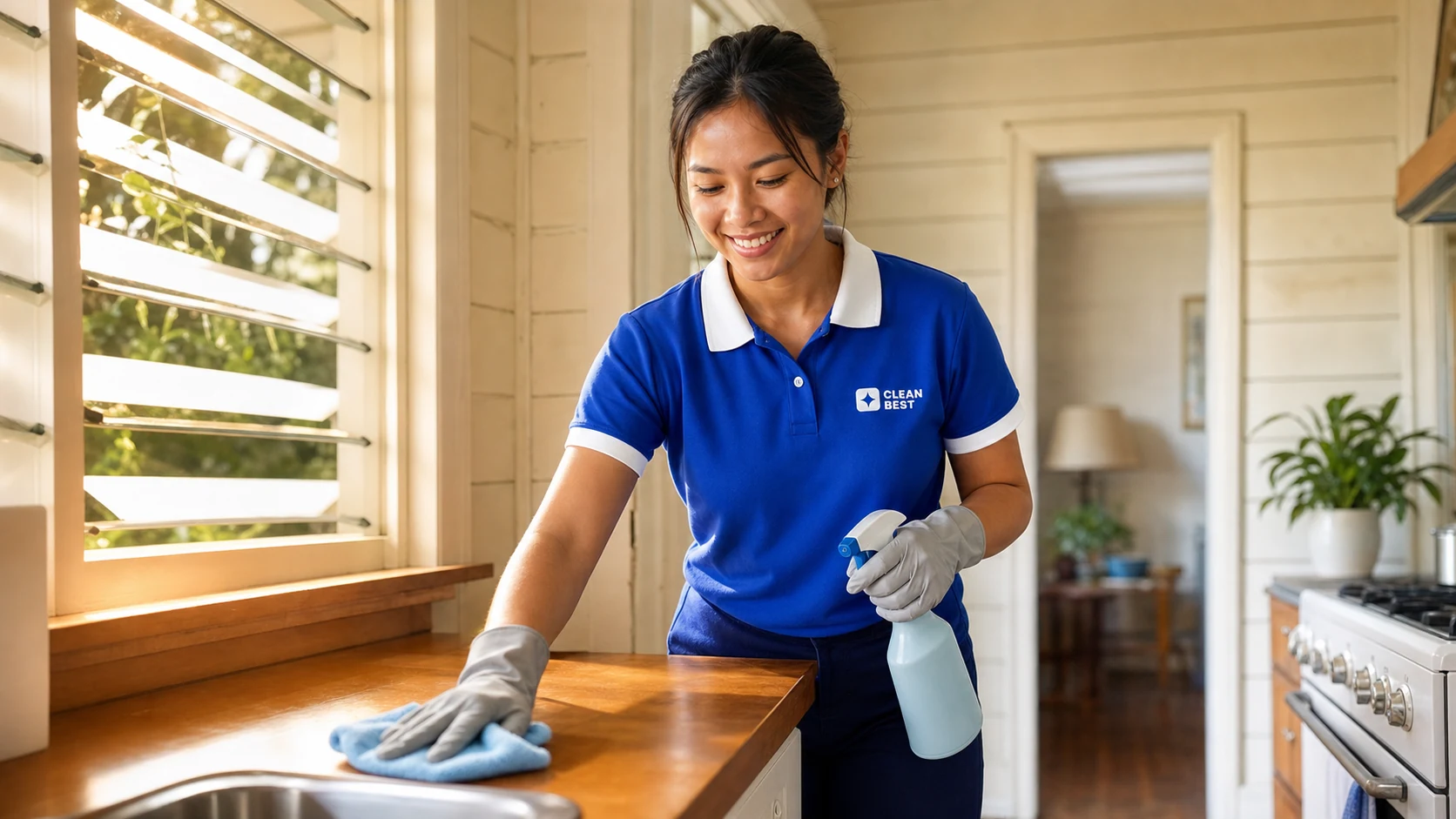
Vetting
Police-Checked Cleaners: How to Verify the Person in Your Home
Handing a house key to a stranger should not be a lower standard than handing over a clinic key, though the industry routinely treats it as one. Here is how to check the claim on the website is real — and what a household is entitled to ask for.
- The difference between a claim and a vetting record
- The two insurance certificates to ask for by name
- Why one named cleaner matters more than the price
- What a written task list should and should not contain
Operating since 2015
One documented cleaning standard, applied site by site across Sydney and regional NSW
- Police-checked cleanersVetted and inducted before they set foot on your site
- $20m public liabilityCertificates of currency issued before the first shift
- Rolling agreement, no lock-in termScope and price in writing within 24 hours
How do you check a home cleaner is police-checked and insured?
Ask for evidence, not for the claim. “All our cleaners are police checked” appears on almost every cleaning website in Australia and cannot be disproved as written. What can be checked is a record naming the individual who will attend your house, with the date the check was completed. Ask for that. A company that vets its people can produce it; a company that does not will change the subject.
For insurance, ask for two certificates of currency: public liability, which covers damage done in your home, and workers compensation, which covers the cleaner injured in it. Check the insured entity named on the certificate is the company you are actually dealing with, and check the policy period has not lapsed.
Then ask whether you get the same named cleaner each visit, and agree the task list in writing before the first one. Clean Best Australia applies to a household the same vetting standard it applies to a medical practice or a school: a national police check before the first shift, recorded on the site register, and the same assigned cleaner every visit.
- Operating since 2015Trading continuously since 2015
- Police-checked cleanersWorkplaces, clinics, campuses, buildings and homes
- $20m public liabilityPlus workers compensation for every person on the roster
- Every site audited monthlyFindings and corrective actions issued in writing
The same standard, at a smaller scale
What a household is entitled to ask a cleaning company for
Households ask about police checked cleaners and then, having received a yes, ask nothing else. That is the whole problem. The arrangement that eventually gets abandoned rarely fails on vetting and it rarely fails on the standard of the cleaning. It fails because a different person turns up each time. You explain the house again. You explain that the floorboards cannot take water, again. You come home to find the good pan has been scoured, or a room you asked nobody to enter has been tidied, and you decide it is easier to do it yourself.
So there are really four questions, and the vetting one is only the first. Each heading below is one of them, and you can put every one to any company you are considering, including us.
The same cleaner is the whole product
Your cleaner learns your house. Which floor cannot take water. Which cupboard door sticks. Where the dog’s bowl lives. Which room has a teenager asleep in it on a Thursday. None of that can be written into a list well enough to transfer to a stranger, and none of it survives a rotating pool. So we assign one person, and if they leave, you meet the replacement and walk the house again rather than discovering the change from a text message.
The same vetting as a clinic
Every cleaner entering a house is police-checked before the first shift and is covered by our workers compensation policy, behind twenty million dollars of public liability. That is exactly the standard we apply to a cleaner entering a medical practice, and it should be obvious that handing over a house key is not a lower-stakes act than handing over a clinic key — even though a great deal of the domestic cleaning market prices it as though it is.
A written list ends the awkward conversations
We walk the house with you and write the list down: the core work, the extras you want, and the things you would rather we left alone. That last category is the one nobody asks about, and it is where the arguments come from — the study nobody should enter, the shelf of things that must not be moved, the pan that should never be scoured. With it written down, changing the arrangement later is a phone call rather than a negotiation about what was said in April.
Surfaces that punish a guess
Timber, natural stone and some engineered finishes are unforgiving, and the damage is usually invisible until it is permanent — a floorboard lifting a year after somebody started mopping it with water, a benchtop etched by an acidic cleaner. So the surfaces get recorded at the walkthrough, along with the method for each. If you would rather we used your own products, that is entirely fine and reasonably common.
Frequency, honestly recommended
Most households land on fortnightly. Weekly makes sense for larger families, pets, or anyone working from home who cannot stand the intervening week. Monthly works for smaller households, though each visit is longer because more has accumulated. We will happily recommend less than you asked for — a household that is paying for work that has not accumulated is a household that quietly cancels within the year.
What it costs to find out
We come and walk the house at no charge, and within 24 hours you have a written list and a fixed price per visit — not an hourly rate that expands to fill the time. There is no lock-in, no penalty for pausing, and no drama about skipping a fortnight when you are away.
Call 02 5839 3012 and tell us about the house.
Access and trust
A house key is not a lower standard than a clinic key
The domestic cleaning market is comfortable with an extraordinary level of informality: an unnamed person, no verified background, no insurance, no written scope, and a key handed over on trust because the price was good. It works out most of the time, which is precisely why the industry keeps doing it.
We apply the register. The cleaner is police-checked. Access — key, lockbox or code — is recorded and held securely, used by the same person every visit, and returned or revoked the moment the arrangement ends. It is not complicated, and it costs nothing to do properly.
- Police check completed before the first visit, recorded on the register
- Access recorded, held securely and used by one assigned cleaner
- Public liability and workers compensation behind every visit
- Access returned or revoked immediately when the arrangement ends
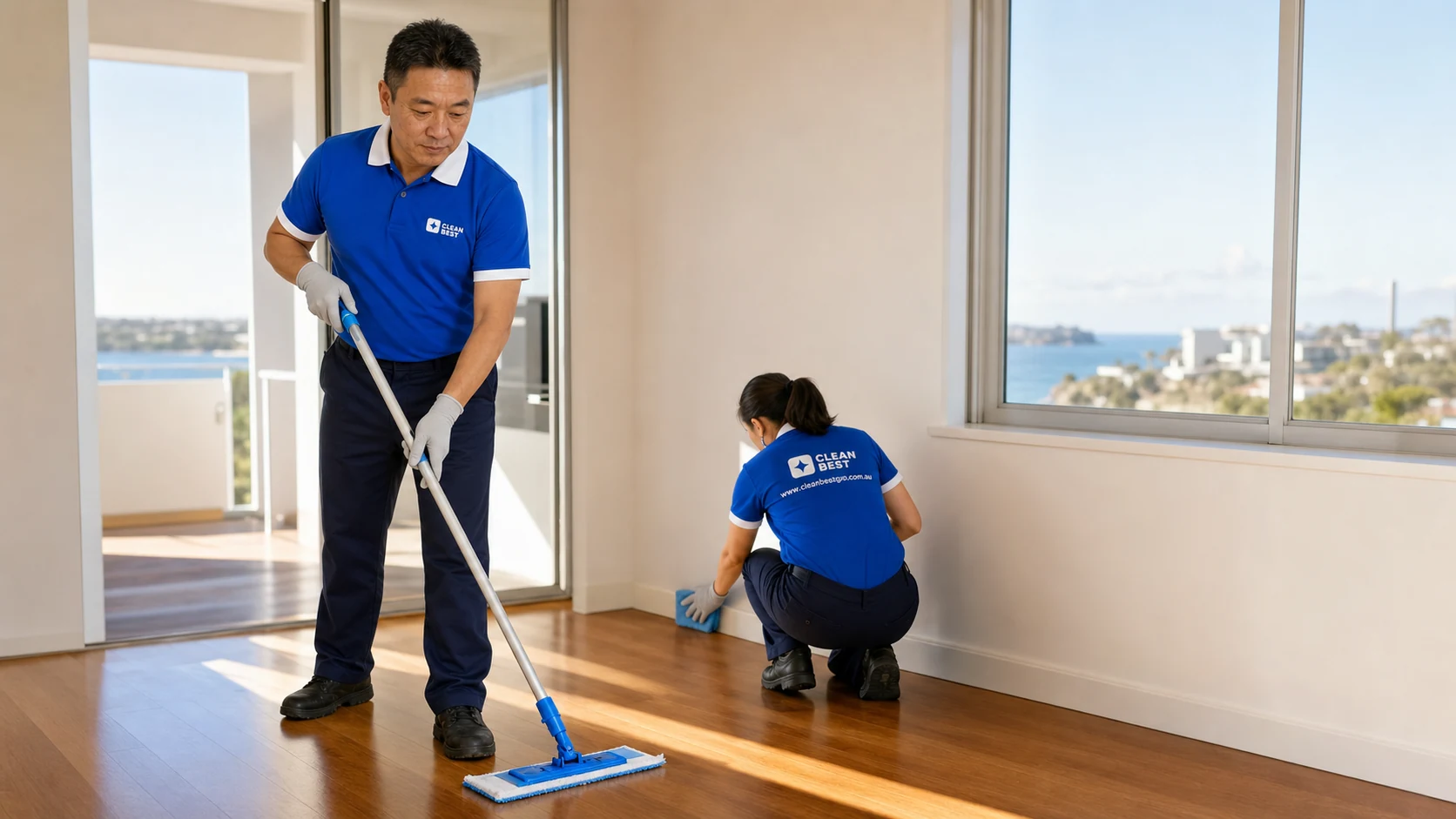
The written specification
What a regular home clean usually covers
The standard list for a Sydney household. Yours is written at the walkthrough, including the extras and the things you would rather we left alone.
- Kitchen: benches, splashbacks, sink, taps, cupboard fronts and appliance exteriors
- Wipe the cooktop and range hood face; clean the microwave inside and out
- Bathrooms: shower, screen, bath, basin, taps, toilet, mirror and tiled surfaces
- Vacuum all carpet and rugs, including under accessible furniture
- Mop hard floors with the method the surface actually tolerates
- Dust surfaces, shelves, sills, skirtings and accessible ledges
- Wipe light switches, door handles, remotes and other high-touch points
- Make beds, or change linen where that is on your list
- Tidy and wipe down the laundry, including the machine exteriors and the tub
- Empty all bins and replace liners
- Clean internal glass, mirrors and glass doors
- Finish with the floors, so the house is left the way you would want to walk into it
Oven interiors, fridge interiors, interior windows, balconies, garages and post-renovation cleaning sit outside the regular list and are quoted separately rather than absorbed silently.
Commercials
How a home cleaning price is built
We price the house: bedrooms and bathrooms, floor surfaces, pets, the extras on your list and how often you want us. Fixed per visit, never an hourly rate that quietly expands.
Apartment
Units and smaller homes with one or two bedrooms, one bathroom and a compact kitchen.
- The same police-checked cleaner every visit
- Kitchen, bathroom, floors, dusting and bins as standard
- Written list agreed at the first walkthrough
- Weekly, fortnightly or monthly — changed by phone call
Fixed figure, issued in writing before anyone starts.
Family home
Three and four bedroom houses with multiple bathrooms, a living area, laundry and often pets.
- Full house clean with bathrooms and kitchen led first
- Optional extras: oven, fridge interior, interior windows, linen
- Pet hair and high-traffic areas built into the list
- Access held securely on the site register
Fixed figure, issued in writing before anyone starts.
Large residence
Larger homes, multi-level residences and properties with extensive hard-floor or delicate surfaces.
- Two cleaners where the house genuinely warrants it
- Surface-specific method for timber, stone and delicate finishes
- Periodic programmes: carpet extraction, windows, deep kitchen
- One contact and one invoice across everything
Fixed figure, issued in writing before anyone starts.
Site inspection at no charge, then a written scope and price inside 24 hours.
The process
How a household gets started
Four steps, and the walkthrough is where the arrangement is actually made — everything after that is just the schedule.
- 01
Tell us about the house
Call 02 5839 3012 with the bedrooms and bathrooms, the floor surfaces, whether there are pets, and how often you think you need us.
- 02
Walk it together
We come to the house, walk it with you, and write the list — including the rooms you would rather we did not enter and the surfaces that need care.
- 03
Written list and fixed price
Within 24 hours you have the list and a fixed price per visit. No hourly rate that quietly grows, and no surprises on the invoice.
- 04
The same cleaner, every visit
Your cleaner starts on the agreed day, uses the agreed access, and works the list. Change it, pause it or move it whenever you need to.
FAQ
What households ask before they hand over a key
The questions worth settling before a stranger has access to your home.
Should the same person clean my house every time?
Yes, and it is worth asking directly, because it is the first thing most agencies quietly abandon. A cleaner who returns learns your house — which floor cannot take water, which cupboard sticks, where the dog's bowl lives, which room your teenager will be asleep in. A rotating pool never learns any of it, and the standard resets to zero every visit. Ask whether you get a named person, and what happens when that person is unwell.
How do I check that a home cleaner is police-checked and insured?
Ask for the evidence rather than the claim. "All our cleaners are police checked" appears on nearly every cleaning website in the country and is unfalsifiable as written; a record naming the person who will actually attend your house is not. For insurance, ask for certificates of currency for public liability and workers compensation, and check the insured entity matches the company you are dealing with. Clean Best applies the same vetting standard to a house that it applies to a clinic.
Do I need to be home during the clean?
Most clients are not, and it works perfectly well. Access is agreed in advance — a key, a lockbox, a code — recorded on the site register and held securely, and the same cleaner uses it every visit. If you would prefer to be home the first time so you can walk the house together, that is usually a good idea and it makes the written list far more accurate.
What is on the list, and can I change it?
Kitchens, bathrooms, floors, dusting, surfaces and bins are the standard core. What you add to it is up to you: interior windows, oven, fridge interior, balcony, laundry, linen change, or a room you would rather nobody entered. It is a written list, so changing it is a conversation rather than an argument about what was allegedly agreed with somebody who no longer works there.
Does the cleaner bring products and equipment, or do we supply them?
Yes, unless you would rather we used yours — which some households prefer, particularly where there are allergies, a stone benchtop with strict requirements, or a preference for low-fragrance products. Whatever we use is recorded, and if your home has a surface that will be ruined by the wrong chemical, tell us at the walkthrough. Timber, natural stone and some engineered surfaces are unforgiving.
How often should a house be cleaned?
Most households land on fortnightly, which keeps a home comfortably maintained without paying for work that has not accumulated. Weekly makes sense for larger families, pets, home-based work or anyone who simply hates the intervening week. Monthly is realistic for smaller households, but it is a deeper clean each time and takes longer. We will recommend honestly, including recommending less than you asked for.
What will you not do?
We do not move heavy furniture, handle biohazard or hoarding situations as part of a regular clean, climb beyond a step ladder, or tidy away personal belongings — because deciding where somebody's things belong is not a cleaner's job and it is how possessions get lost. Anything outside the regular scope, like a full oven detail or a post-renovation clean, is quoted separately rather than absorbed silently.
Can I pause the service when I travel?
Of course. Skip a visit, pause for a month, move a day — it takes a phone call and there is no penalty. The arrangement is rolling with no lock-in term. A household that feels trapped in a cleaning contract will simply cancel it in frustration, so making it easy to pause is the reason most of our home clients are still with us years later.
Keep reading
The rest of the due diligence
What a contractor should be able to evidence in each setting, and the documents to ask every one of them for.

Ask us for the vetting record before you hand over a key
Free walkthrough, then a written list, a fixed price per visit and the same police-checked cleaner every time. Call 02 5839 3012.