

Standards by setting
What Standards Should a Cleaner Meet in Your Setting?
A treatment room, an early learning centre and a live distribution warehouse are held to entirely different things. Twelve settings, and for each one: what a contractor should be able to evidence, and the questions worth asking before you appoint anybody.
- The evidence to ask for, setting by setting
- The baseline every contractor should clear
- Where the requirements get genuinely strict
- What a written specification has to contain
Operating since 2015
One documented cleaning standard, applied site by site across Sydney and regional NSW
- Police-checked cleanersVetted and inducted before they set foot on your site
- $20m public liabilityCertificates of currency issued before the first shift
- Rolling agreement, no lock-in termScope and price in writing within 24 hours
What standards should a cleaning contractor meet?
Every cleaning contractor should clear the same baseline regardless of setting: police-checked personnel, public liability insurance, workers compensation, and a written cleaning specification for the address setting out per-visit, weekly and periodic tasks. All four should be evidenced with documents before the first shift, not asserted in a proposal.
On top of that baseline, the setting decides what else is required. Childcare centres, schools and paediatric clinics turn on Working with Children Check clearances. Medical settings turn on a documented infection-control method and a chemical register. Warehouses and industrial sites turn on a Safe Work Method Statement written for that specific premises rather than a template.
Clean Best Australia works across twelve settings — commercial, office, warehouse, strata, medical centre, childcare, home, carpet, gym, school, end of lease and church — and issues the same eight-document compliance pack for every site on its register, whichever setting it is in.
- Operating since 2015Trading continuously since 2015
- Police-checked cleanersWorkplaces, clinics, campuses, buildings and homes
- $20m public liabilityPlus workers compensation for every person on the roster
- Every site audited monthlyFindings and corrective actions issued in writing
All twelve settings
Twelve settings, and what a contractor must evidence in each
What changes from setting to setting is the method, the equipment and the evidence you should insist on. What never changes is the baseline: vetted people, current insurance, a written scope and somebody auditing against it.
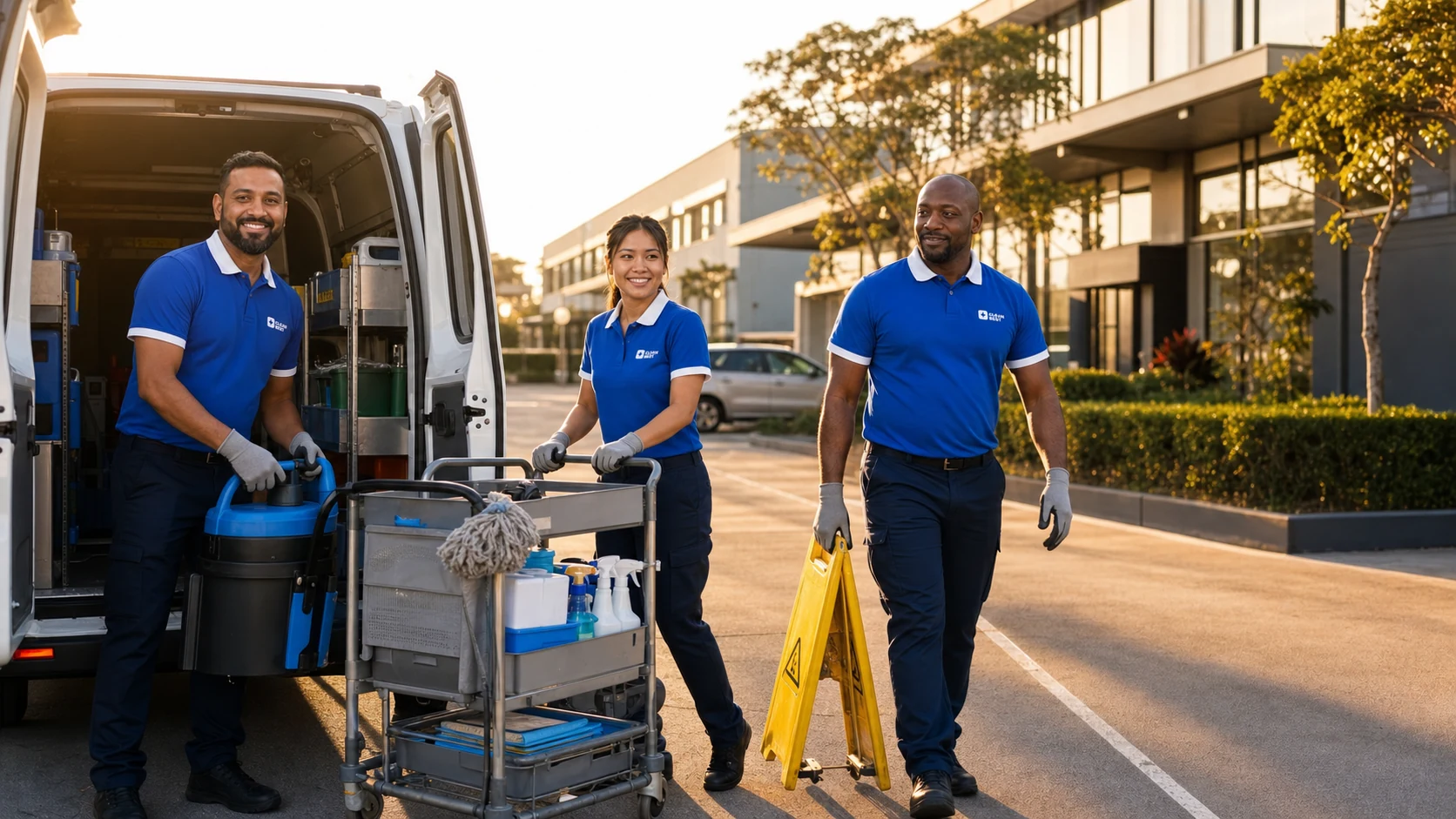
Commercial Cleaning
The questions to put to a commercial cleaning contractor before you sign, and the documents a credible one hands over without being chased.See the commercial cleaning specificationOffice Cleaning
The checklist an office manager should work through before appointing a cleaner — scope, vetting, insurance, and who audits the floor after month three.See the office cleaning specification
Warehouse Cleaning
What a Safe Work Method Statement for warehouse cleaning has to cover, and the WHS evidence to demand before a contractor enters a live site.See the warehouse cleaning specification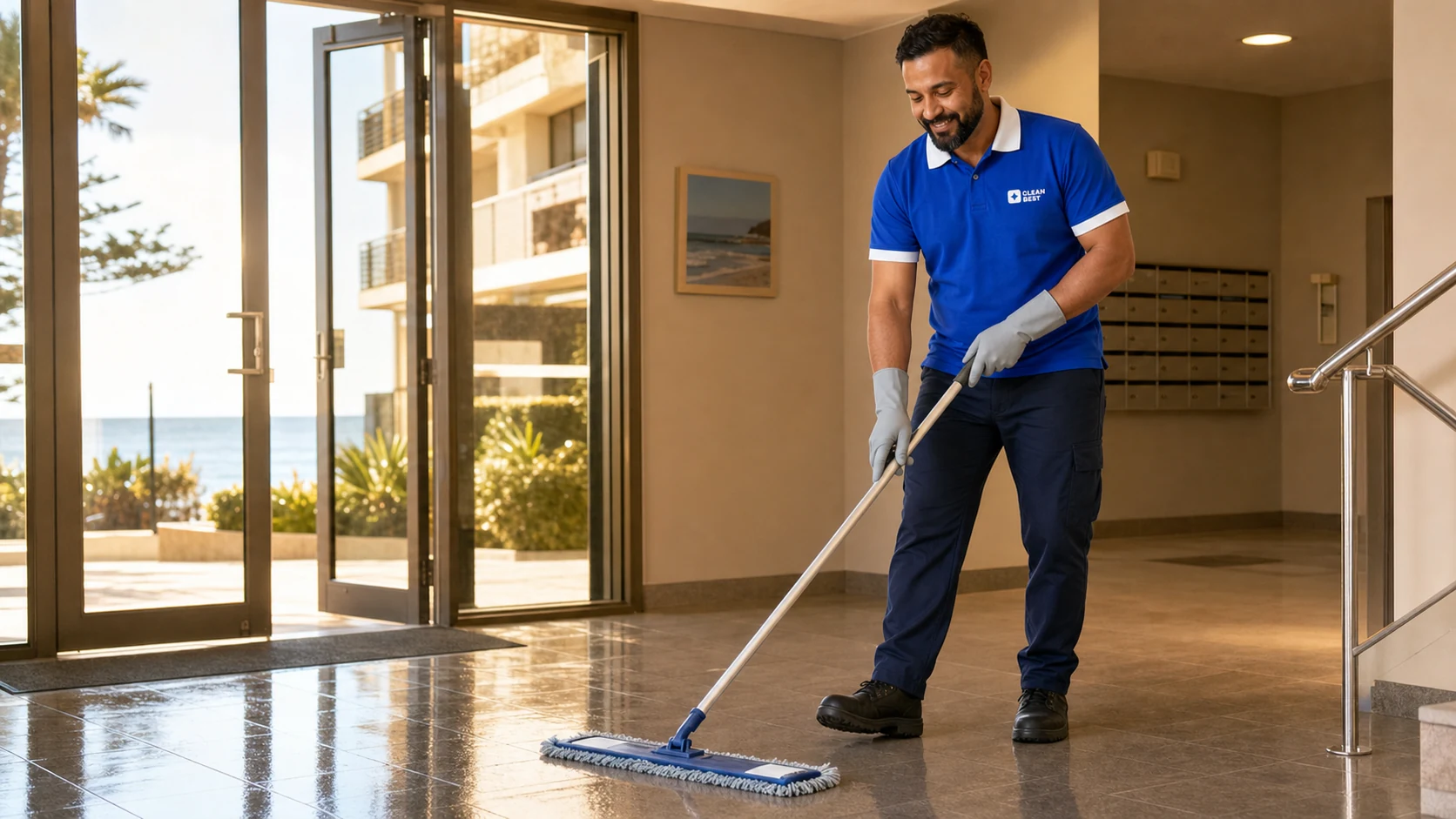
Strata Cleaning
The insurance, scope and reporting a strata committee should verify before appointing a common property cleaner — and what an executive committee can ask for.See the strata cleaning specification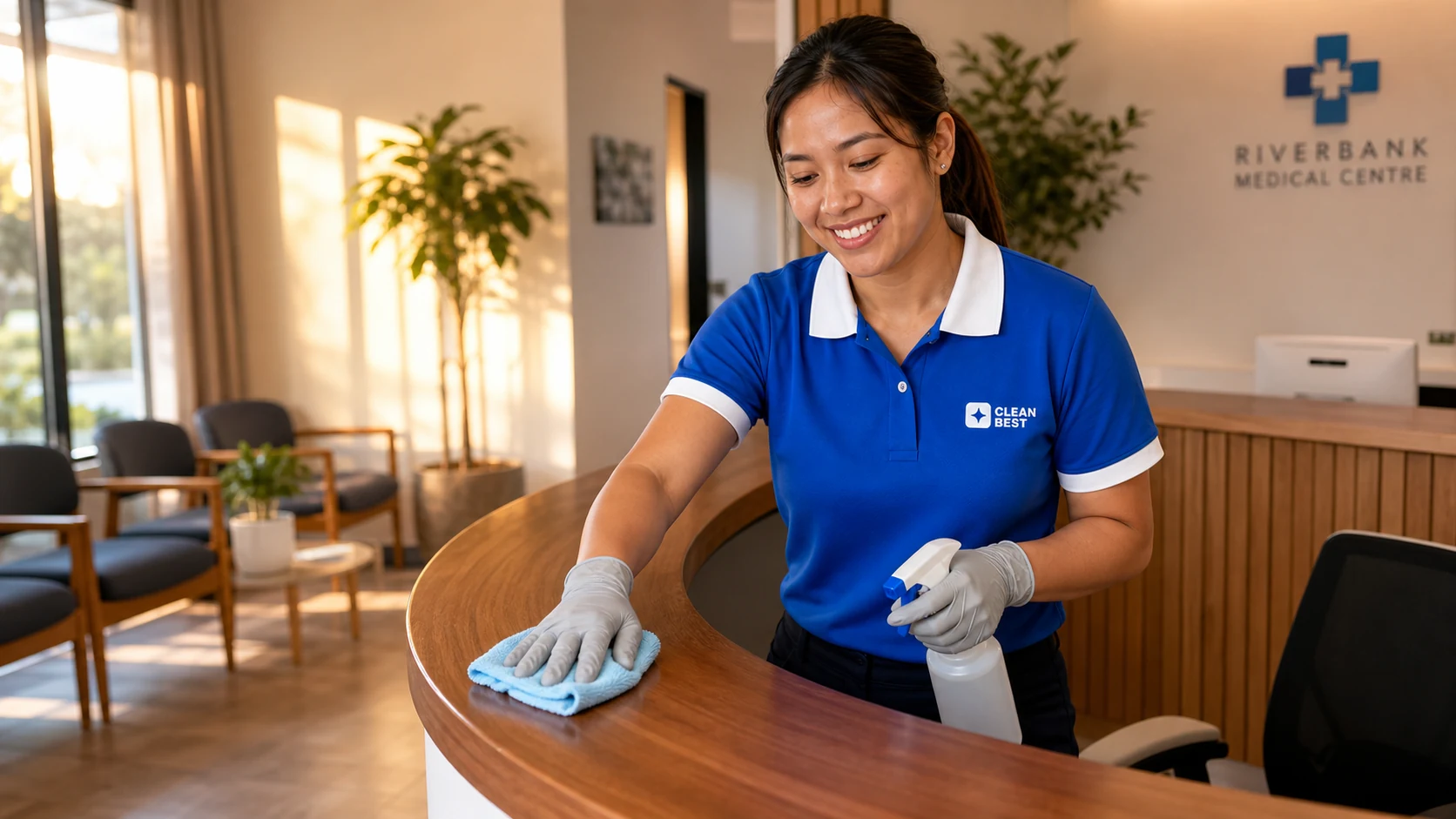
Medical Centre Cleaning
What infection-control practice a medical centre cleaner should be able to evidence: written procedure, colour-coded equipment and a completed task record.See the medical cleaning specification
Childcare Cleaning
The standards an approved provider should hold a childcare cleaner to — WWCC clearances, a chemical register, and records that survive an assessment visit.See the childcare cleaning specification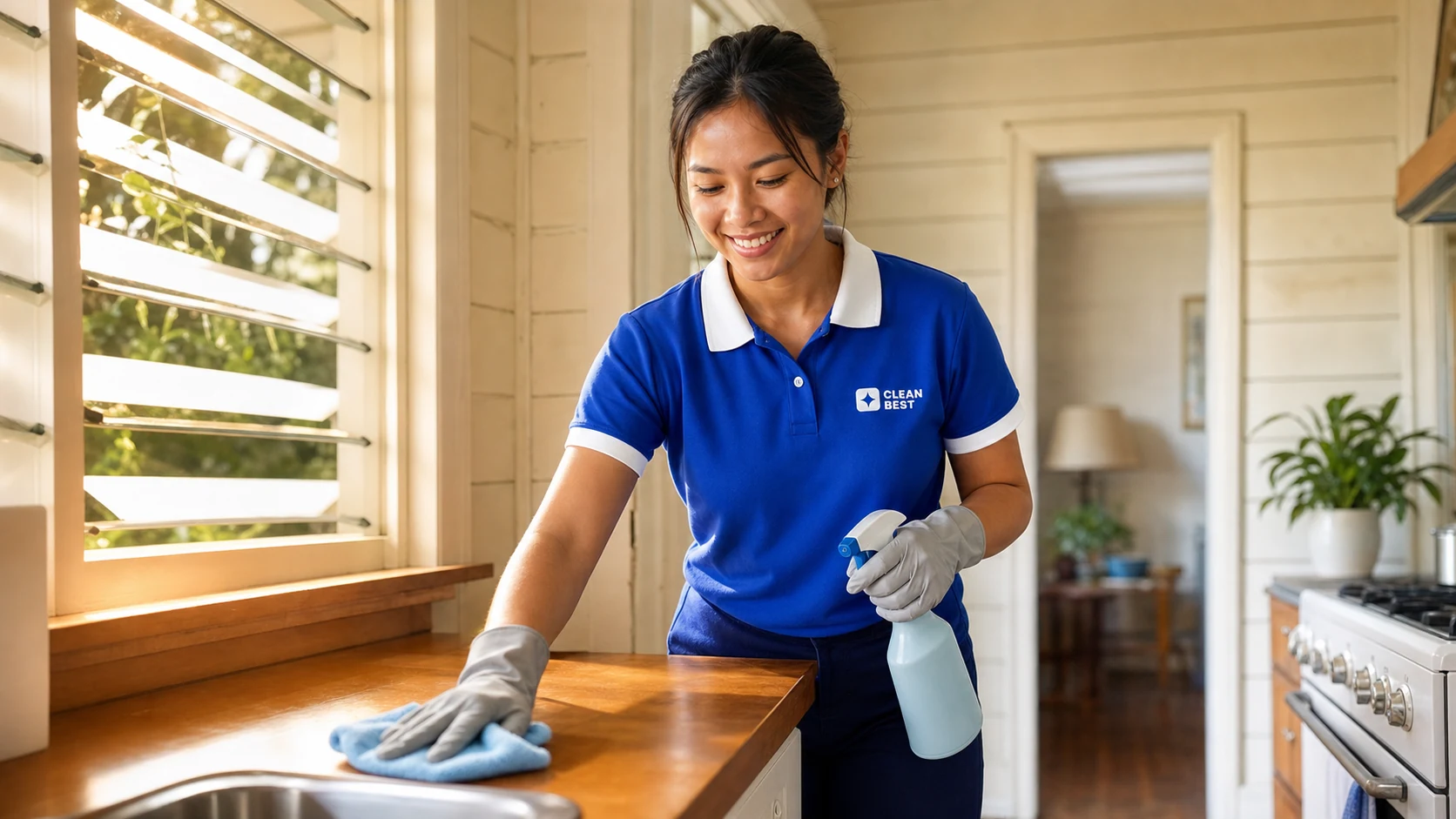
Home Cleaning
How to check that the cleaner you let into your home is police-checked, insured and employed — rather than taking a website's word for all three.See the home cleaning specification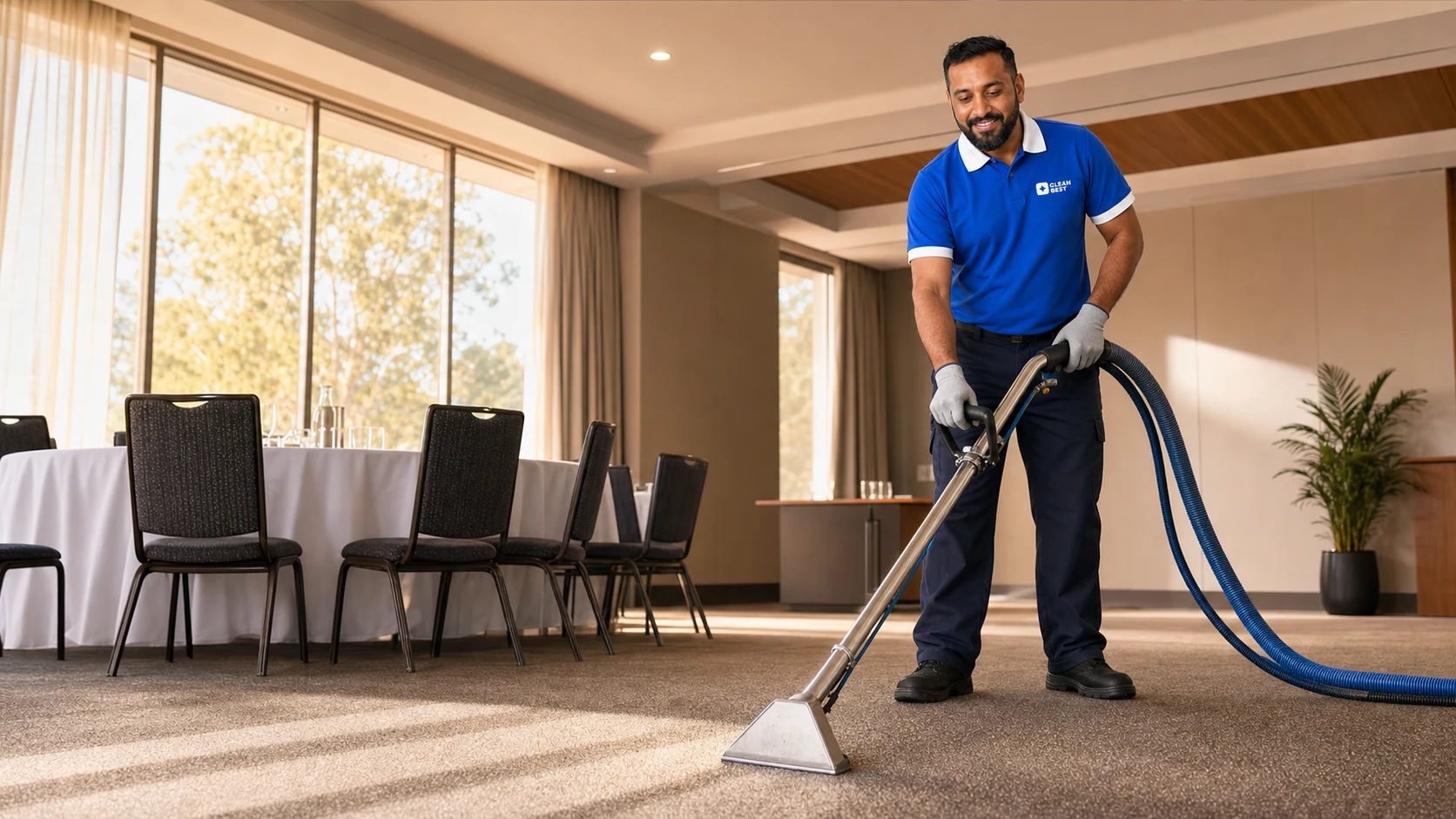
Carpet Cleaning
What to ask a carpet cleaning contractor about method, drying time and chemicals — the three answers that separate a technician from a machine hire.See the carpet cleaning specification
Gym Cleaning
The hygiene standards a gym cleaner should be held to — equipment contact surfaces, wet areas and change rooms, recorded rather than assumed.See the gym cleaning specification
School Cleaning
What an NSW school should require of a cleaning contractor: current Working with Children Checks, a written scope, and evidence it is being followed.See the school cleaning specification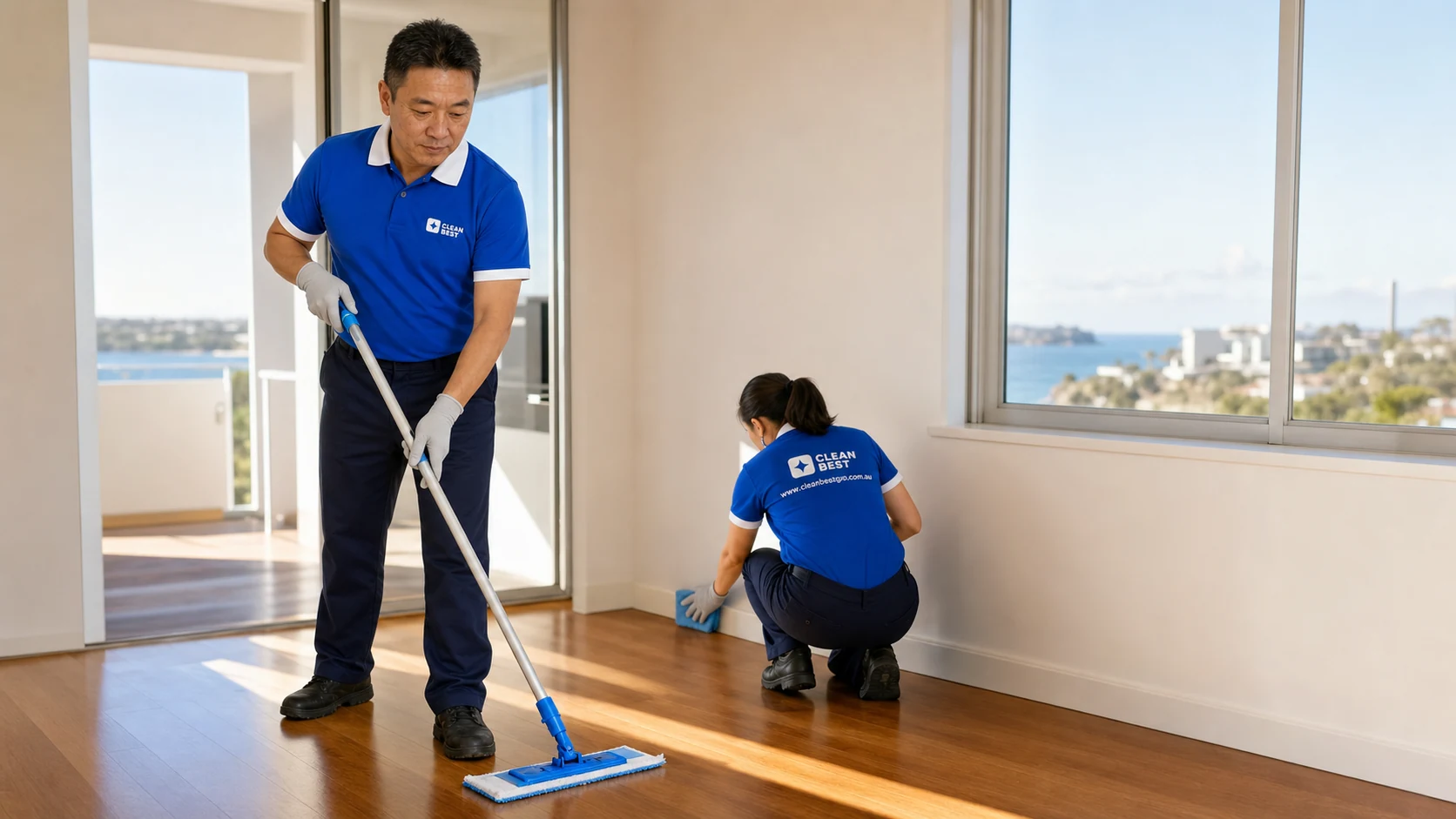
End of Lease Cleaning
How to choose an end of lease cleaner: what a return-visit guarantee must actually say, and why the agent's inspection sheet is the only scope that counts.See the end of lease specification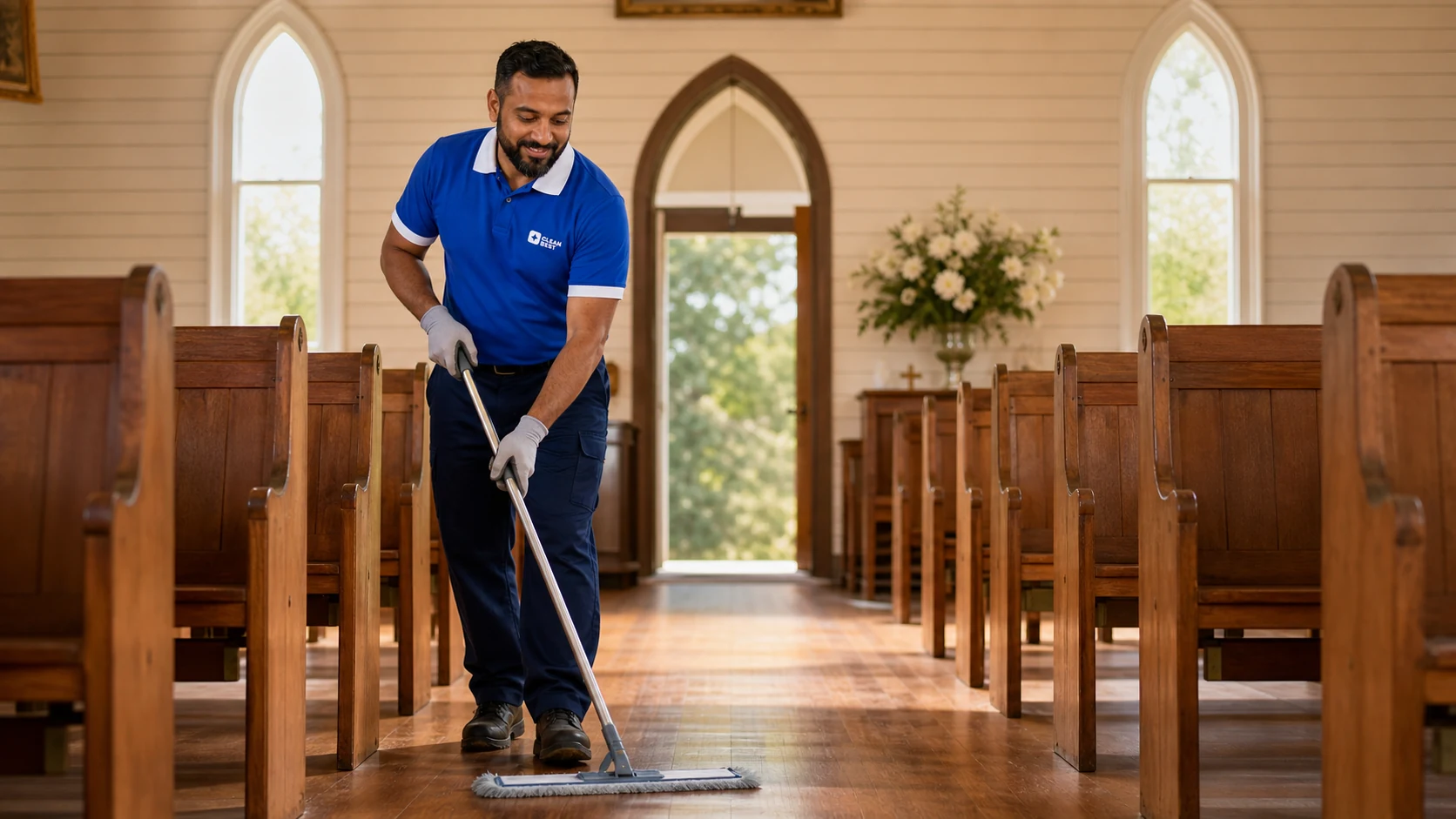
Church Cleaning
What a parish should require of a cleaning contractor — child-safety clearances for hall hire, insurance, and an agreed method for heritage surfaces.See the church cleaning specification
Adding a line
Most clients arrive with one problem and stay for four
An organisation almost never sets out to consolidate its cleaning. It sets out to fix one thing — a floor that keeps failing, a clinic that cannot produce a chemical register, a warehouse whose WHS manager has run out of patience. That gets fixed, and then somebody notices that the carpet programme is a separate contractor and the site office is a third.
Adding a line to an existing agreement takes an inspection and a written scope, not a new negotiation. We already hold the vetting, the insurance and the access records, so the only genuinely new information is the site itself.
- Inspection within 48 hours for an existing client
- No new agreement, no new account manager, no new invoice
- Compliance records already held and current
- One monthly report covering every line and every site
Changeover
Taking over a portfolio without a fortnight of chaos
Switching cleaners across multiple sites is the part nobody enjoys, and the part most providers are vague about. This is our schedule, in days, from the call to the first audited month.
- 01
Days 1–2
Address list and constraints
You send the sites. We come back with the questions that actually matter: who holds the keys, which buildings restrict lifts after hours, which sites have a night shift working through, and which ones your last cleaner kept failing.
- 02
Days 3–7
Inspection round
A supervisor walks every address in person. No portfolio is quoted from a spreadsheet — floor areas get measured, surfaces get identified, and the sites that will be difficult are flagged now rather than discovered later.
- 03
Day 8
Specification and price
One written specification per site, plus the consolidated commercial. Everything is in one document set so your finance and compliance people are reading the same version as your operations people.
- 04
Days 9–14
Mobilisation
Cleaners are assigned and inducted site by site. Insurance certificates, police check records, WWCC numbers and SWMS go to your compliance contact. Keys, codes and alarm procedures are recorded on the site register.
- 05
Day 15 onward
Live, then audited
The roster starts. Four weeks in, every site has been audited against its specification and you receive the findings — including the sites that passed, because a report that only lists failures tells you nothing.
A single site moves faster than this — usually inspected within 48 hours and cleaned within the week. The fifteen days above is what a genuine multi-site changeover costs in calendar time when it is done properly, and we would rather show you the real number than a flattering one.
The shared standard
What every service line has in common
Twelve methods, one set of rules about how the work is defined, who performs it, how it is evidenced and what happens when it goes wrong.
The specification is the contract
Nothing about your clean lives in someone's head. Every site gets a written specification — task by task, per visit, weekly, periodic — and that document is what our supervisors audit against and what you hold us to.
Vetting done once, evidenced always
Police checks before the first shift, Working with Children Checks for anyone entering a school, childcare centre or paediatric clinic, and a register we can produce on request rather than reconstruct after the fact.
$20m public liability and workers compensation
Public liability and workers compensation cover everyone on the roster. Certificates of currency go straight to your building manager or compliance team before a cleaner sets foot on site, not two weeks after they ask.
One team across every address
If you hold eleven sites you get one account manager, one register and one invoice, not eleven separate relationships that drift apart and eleven different answers when something goes wrong at 6am.
Audited monthly, in writing
A supervisor walks each site every month against the agreed specification and sends the findings to you. Anything below standard is rectified before the next scheduled visit, at our cost, without an argument.
Built to survive a procurement review
SWMS, safety data sheets, chemical registers, induction records and insurance certificates are prepared as a matter of course. When your compliance team asks for the pack, it already exists.
FAQ
Questions buyers ask about cleaning standards
What procurement teams, practice managers and facilities leads want settled before a contractor is on site.
Can one agreement cover several different service lines?
Yes, and most of our clients end up there. An organisation that starts with office cleaning usually adds carpet extraction, then the warehouse, then the site office. They all sit on one agreement, with a written specification for each site and each service line, one account manager, one audit cycle and one invoice. Adding a line does not mean starting a new negotiation or meeting a new person.
Which settings should you demand the most evidence in?
Medical, childcare and school sites, without question. Those settings turn on Working with Children Check clearances, a documented infection control or hygiene method, a chemical register, and task records that survive an accreditation or assessment visit. Warehouse and industrial sites turn on a Safe Work Method Statement written for that specific premises. Every setting should carry police checks, public liability and workers compensation as a baseline — what differs is what sits on top of that baseline.
Do you take on single sites, or only portfolios?
Both, and the standard does not change between them. A single dental practice gets the same written specification, the same vetted cleaner, the same monthly audit and the same compliance pack as a fifteen-building portfolio. The only difference is that a portfolio also gets a consolidated report and a single invoice, because that is the problem a portfolio actually has.
What is not in your scope?
Clinical and sharps waste, pool water chemistry, heritage conservation, pest control, chemical storage in school science areas, and anything requiring a licence or competency we do not hold. We write those boundaries into the specification rather than leaving them to a cleaner's judgement at nine in the evening, because that is exactly when someone tries to be helpful and creates a problem.
How quickly can a new service line be added?
An existing client adding a line usually has an inspection within 48 hours and a written scope back the next day, because we already hold the vetting, insurance and access records. A new site under an existing agreement is faster still. Adding a whole new portfolio takes about a fortnight to inspect and mobilise properly, and we will not pretend otherwise.
Do you provide the equipment and consumables?
Cleaners arrive with their own commercial equipment for every service line, and each site holds a chemical register listing what is in use with safety data sheets attached. Consumables — paper, soap, liners — can be managed by us and invoiced at cost, or left with your existing supplier. Most multi-site clients hand them over eventually, because chasing eleven separate consumables accounts is nobody's idea of a good month.
Keep reading
Operational and buyer guides
Twenty additional pages covering service control, procurement, evidence and operational planning for this domain lane.
- Cleaning Contractor WHS Management Plan
- Cleaning Contractor SWMS Review
- Commercial Cleaning Risk Register
- Cleaning Chemical Register Template
- Cleaning Safety Data Sheet Register
- Cleaning Contractor Induction Checklist
- Cleaning Contractor Licence Requirements NSW
- Cleaning Contractor Insurance Requirements NSW
- Cleaning Contractor Police Check Requirements
- Cleaning Contractor WWCC Requirements
- Commercial Cleaning Incident Report Template
- Cleaning Contractor Hazard Report
- Cleaning Contractor Training Matrix
- Cleaning Equipment Inspection Register
- Cleaning Contractor Audit Program
- Commercial Cleaning Corrective Action Plan
- Cleaning Contractor Quality Management Plan
- Commercial Cleaning Environmental Plan
- Cleaning Contractor Document Register
- Cleaning Compliance Evidence Pack
100 service areas
Police Checked Commercial Cleaners across Sydney and Western Sydney
Choose an area for local service details, a written scope and a free quote. These are service areas only; Clean Best's operational address remains in Seven Hills.
- Sydney 2000
- Barangaroo 2000
- Haymarket 2000
- Pyrmont 2009
- Ultimo 2007
- Surry Hills 2010
- Darlinghurst 2010
- Zetland 2017
- Waterloo 2017
- Rosebery 2018
- Alexandria 2015
- Mascot 2020
- Botany 2019
- Matraville 2036
- Glebe 2037
- Annandale 2038
- Leichhardt 2040
- Balmain 2041
- Rozelle 2039
- Drummoyne 2047
- Five Dock 2046
- Concord 2137
- Burwood 2134
- Ashfield 2131
- Marrickville 2204
- Canterbury 2193
- Campsie 2194
- Lakemba 2195
- Greenacre 2190
- Chullora 2190
- Bankstown 2200
- Padstow 2211
- Revesby 2212
- Milperra 2214
- Hurstville 2220
- Kogarah 2217
- Rockdale 2216
- Miranda 2228
- Caringbah 2229
- Sutherland 2232
- Cronulla 2230
- North Sydney 2060
- Crows Nest 2065
- St Leonards 2065
- Artarmon 2064
- Lane Cove 2066
- Chatswood 2067
- North Ryde 2113
- Macquarie Park 2113
- Ryde 2112
- Pymble 2073
- Hornsby 2077
- Mount Kuring-gai 2080
- Brookvale 2100
- Dee Why 2099
- Frenchs Forest 2086
- Mona Vale 2103
- Homebush 2140
- Homebush West 2140
- Strathfield 2135
- Rhodes 2138
- Sydney Olympic Park 2127
- Newington 2127
- Silverwater 2128
- Lidcombe 2141
- Auburn 2144
- Granville 2142
- Rosehill 2142
- Harris Park 2150
- Parramatta 2150
- Westmead 2145
- Wentworthville 2145
- Merrylands 2160
- Guildford 2161
- Yennora 2161
- Fairfield 2165
- Smithfield 2164
- Wetherill Park 2164
- Liverpool 2170
- Moorebank 2170
- Prestons 2170
- Ingleburn 2565
- Minto 2566
- Campbelltown 2560
- Oran Park 2570
- Narellan 2567
- Camden 2570
- Seven Hills 2147
- Blacktown 2148
- Eastern Creek 2766
- Marsden Park 2765
- Rouse Hill 2155
- Kellyville 2155
- Bella Vista 2153
- Norwest 2153
- Baulkham Hills 2153
- Castle Hill 2154
- St Marys 2760
- Erskine Park 2759
- Penrith 2750
Keep reading
Start with the setting you are actually buying for
Each page sets out what a contractor in that setting should be able to evidence, and what a written specification has to contain.
- The eight compliance documents to ask for
- Medical centre cleaning and infection control
- Warehouse cleaning SWMS and WHS evidence
- Childcare cleaning standards and WWCC clearances
- Cleaning inspection checklist
- Commercial cleaning WHS checklist
- Cleaning contractor insurance checklist
- Cleaning service level agreement template
- About Clean Best Australia
- Ask us for the compliance pack
Hold every contractor to the same evidence, whatever the setting
Ask us for the compliance pack, and we will inspect your site at no charge. Written scope and fixed price inside 24 hours, no lock-in term. Call 02 5839 3012.